


Your Gift Matters
Your gift, no matter the size, can provide important learning experiences for more than 14,000 students who learn via research and coursework in chemistry each year. A gift can support upgrades of equipment and facilities, graduate student training and conference travel and hands-on experience in the lab for undergraduates. All of these components are critical for our drive to excel in scholarship, education and outreach.
We are grateful for gifts from alumni, friends, and businesses that change students' lives.
How to Give
Pay online through UW Foundation:
or by check
Payable to:
University of Wisconsin Foundation-Chemistry
Department of Chemistry Fund – 112221370
Mailed to:
University of Wisconsin Foundation
US Bank Lockbox 78236
Milwaukee, WI 53278
I am grateful for your belief in my potential.
-ESHANI, Graduate Student
The UW-Madison Department of Chemistry is known for its outstanding teaching, research, and outreach programs as well as its collegial and collaborative atmosphere. Here, you’ll find gritty, courageous leaders who are steering our program with curiosity, insight, and determination. This spirit will lead us into the future, but we can’t do it alone. Our continued success depends on the support of donors and benefactors who share our passion for discovery and offering the highest quality of education.
Priorities for the department include boosting lab start-up funding to attract faculty talent, increasing support for our graduate students, and ensuring top quality impactful research by maintaining cutting-edge shared instrumentation facilities. Your donation can support our growth and mission in a myriad of ways. We invite you to explore the ways making a gift can work best for you.
GOALS
- Attract and retain excellent faculty
by offering competitive start-up packages that fund lab startup costs, equipment purchases, and research. - Extend support for graduate students and postdocs
by providing funding beyond traditional limits to foster more time for research. - Ensure top quality impactful research
through state-of-the-art shared instrumentation. - Provide broader access to a chemistry Ph.D.
by supporting programs that attract and retain graduate students who represent varied backgrounds, perspectives, and experiences. - Expand and fortify our chemistry education outreach
program to advance the Wisconsin Idea.
Learn More
This is an accordion element with a series of buttons that open and close related content panels.
Attract and retain excellent faculty
Faculty support is one of the top priorities for the department. For new faculty, this support helps them establish their labs, research, and grant funding. Market-driven costs now average $1.5 million per new faculty member. State-of-the-art equipment, supplies, and support are critical to recruiting and securing top talent, and having resources available for this purpose will keep us on top as research leaders. It allows us to attract top-quality mid-career scholars to our department, and for established faculty, this support raises faculty distinction among peers and helps us to keep our most successful faculty from being enticed away by other institutions.
$1M ENDOWED PROFESSORSHIP
$2M ENDOWED CHAIR
$3M ENDOWED DISTINGUISHED CHAIR
Support graduate students and postdocs
The lives of graduate students and postdocs can be enriching, exhilarating, and exhausting all at the same time. Balancing the demands of classes, research, and meeting a personal budget can sometimes be difficult. Time is a precious commodity and gifts to graduate student and postdoc support allow these individuals to focus on what’s important—doing the critical research that advances them toward their goals. Gifts to this initiative can support a postdoc or graduate student’s research for a summer, a semester, or an entire year. It can allow an individual to work with a top researcher at UW, or it can fund a postdoc or graduate student fellowship to allow these individuals to focus on developing potential discoveries.
$45,000 ANNUALLY PER STUDENT/POSTDOC
$10,000 PER SUMMER PER STUDENT/POSTDOC
Ensure top quality impactful research through state-of-the-art shared instrumentation
The Paul Bender Chemistry Instrument Center (PBCIC) serves the research needs of more than 60 research groups both on- and off-campus, as well as many private companies. Today, the PBCIC employs six award-winning Ph.D. scientists, and four teaching assistants offering guidance and instruction in magnetic resonance, electron paramagnetic resonance, mass spectrometry, and X-ray crystallography. The center serves more than 60 research groups both on- and off-campus, as well as many private companies. Staying on the cutting edge of instrumentation development and maintaining the center’s instruments valued at more than $11.3 million is no easy task. Upgrades to and acquisitions of equipment relies on funding from federal grants, the university’s Instructional Modernization grants, corporate sponsorships, bequests, and private donations.
$1.5-$2M ANNUALLY
Provide broader access to a chemistry Ph.D.
Opening our department to a wider variety of backgrounds, perspectives, and experiences can result in more available talent, better problem-solving, and research environments that prepare our students for work life after graduation.
We have created a unique recruitment program that allows individuals to explore and experience our Ph.D. program at no expense. The program invites prospective students to the Department of Chemistry to meet one-on-one with faculty, learn about the program, tour instrumentation facilities, and network with graduate student hosts. This program also introduces many prospective students to the process of applying to a Ph.D. program.
Bridge is a post-baccalaureate program aimed at increasing the number of students from underrepresented populations who complete a Ph.D. degree in chemistry. As a direct result of Bridge, our department has more than doubled the participation of underrepresented students in our Ph.D. program.
$25,000 ANNUALLY FOR RECRUITMENT PROGRAM
$175,000 ANNUALLY TO SUPPORT 3-5 BRIDGE FELLOWS
Expand and fortify our chemistry education outreach
Outreach for the Department of Chemistry is focused on chemistry learning that illuminates daily life and embodies the Wisconsin Idea. The first of our initiatives is to build science teacher capacity through research-practice partnerships with high school and college teachers around the country. These efforts will support the creation of spaces for students to build, refine, and use chemistry ideas and models to make sense of complex phenomena and design solutions for important problems. The second initiative will directly engage learners to use chemistry knowledge productively. ChemCamps for middle school students, debates organized around contemporary issues that intersect with chemistry, the continuance of SCIENCounters—a national program that connects young learners with working scientists, and awards for communicating Ph.D. work to the public through thesis chapters written for a lay audience and disseminated online are some of the programs in this initiative. We are currently in the initial five-year growth phase of this outreach plan, which is supported by a variety of seed funding.
$200,000 ANNUALLY
“Your contributions truly have a profound impact on the department and make it one of the best places in the world to study chemistry.”
–SEAN, Graduate Student
Together, we can make an impact.
A $10,000 gift would support the summer research of a graduate student
A $25,000 gift would enable 25 prospective Ph.D students to visit the Department of Chemistry, meet our faculty, and learn more about our program.
A $45,000 gift would support a graduate student's research for an entire academic year.
A $175,000 gift would support 3-5 Bridge Fellows for a year.
A $200,000 gift would advance the Wisconsin Idea by providing chemistry learning opportunities to hundreds of middle school and high school students across the country.
A $300,000 to $1 million gift would support the startup costs of a new faculty member to the Department of Chemistry.
A $1-3 million endowed gift would provide a stable funding source for faculty members and open doors to additional areas of support, such as research assistantships, outside collaborations, and external grant funding.
Every gift to the Department of Chemistry helps, but giving at these levels can make a significant difference to students, faculty, and individuals beyond our classrooms and labs.
How Your Gifts Make a Difference
Endowed Professorships
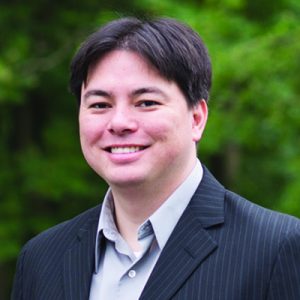
Yamamoto Family Professor of Chemistry
AJ Boydston
Professor Boydston’s research in organic and polymer chemistry explores how molecular structure shapes materials’ properties, opening paths to new capabilities. “I hope that someday our research can be used to enable societal advances such as personalized 3D-printed medical devices, high-toughness lightweight vehicles, self-repairing plastics, and safer platforms for drug delivery,” he shares. “The Yamamoto Family Professorship is a generous show of support and faith in our department’s mission,” Boydston says. “It’s a way to carry on a legacy of excellence in science as well as humanity. Learning more about the Yamamoto family’s history encourages me to consider my roles as a mentor, educator, and researcher, and how I might serve in the spirit of their name.”
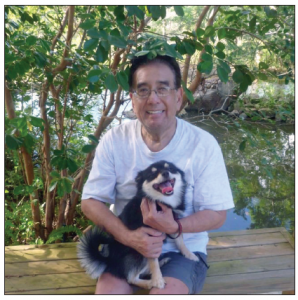
About the Yamamoto Family Professorship in Chemistry Fund
A loyal Madisonian, Steve Yamamoto ’65 grew up proud to be a Wisconsinite — his father, Shinji, settled in Wisconsin after being freed from a WWII Japanese internment camp in Utah and became a state architect overseeing construction of major UW buildings, while his mother, Hifumi, was a beloved fixture at University Housing. Steve and his siblings, Diane ’68 and JoAnn ’75, all earned chemistry degrees from UW–Madison before pursuing doctorates in the field, and that deep connection to the university shaped the family’s philanthropic spirit. After retiring to Palm Beach in 2003, Steve taught chemistry at two community colleges and, following a cancer diagnosis, built a Japanese restorative garden to support his own healing and help others. He passed away in 2019, but his family’s legacy endures through the Yamamoto Family Professor of Chemistry, an endowed professorship that helps the department recruit and retain outstanding faculty.
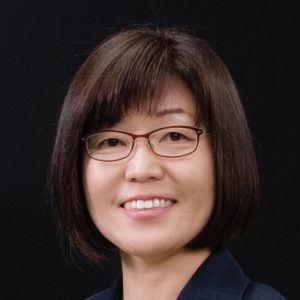
Wayland E. Noland Distinguished Chair of Chemistry
Kyoung-Shin Choi
Professor Choi is a global leader in electrochemistry and materials chemistry. Her research develops innovative materials, processes, and devices to address pressing challenges in sustainability, spanning the production of fuels and chemicals using renewable resources such as solar energy and biomass to the recovery of valuable elements from diverse waste streams, enabling closed-loop supply chains for critical materials. By bridging fundamental scientific discovery with practical solutions that benefit society, her research embodies the Wisconsin Idea. The professorship enables her to incubate pioneering ideas at their earliest stages and generate the foundational results needed to establish new frontiers in science and technology with the potential for transformative societal impact.
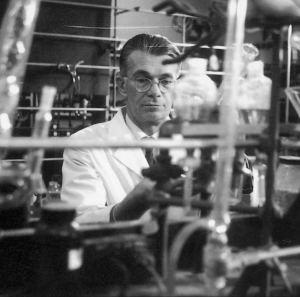
About the Wayland E. Noland Distinguished Chair of Chemistry Fund
The Wayland E. Noland Distinguished Chair in Chemistry stands as one of the highest honors the Department of Chemistry can bestow, reserved for its most accomplished faculty and named for a proud UW–Madison legacy. Professor Noland earned his bachelor’s in chemistry here in 1948 before completing a doctorate at Harvard and building a distinguished career on the chemistry faculty at the University of Minnesota. By endowing a distinguished chair, Professor Noland provides one of the most powerful ways to shape the department’s future — attracting and empowering exceptional scholars while honoring a legacy of excellence for generations to come.
Lester R. McNall Professor of Chemistry
Shannon Stahl
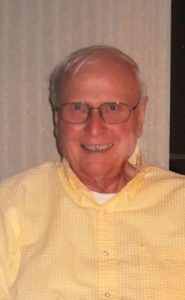
Professor Stahl’s lab develops new catalysts composed of earth-abundant metals that use oxygen as a “green” oxidant to make chemical reactions cleaner and more efficient, avoiding the need for conventional hazardous and wasteful chemicals. His group applies these methods to problems like drug synthesis, breaking down plant material (biomass/lignin) into useful chemicals, and developing new approaches for chemical recycling of waste plastics. The Lester R. McNall Professorship Fund has contributed to a new project that borrows concepts from industrial chemical manufacturing to support more cost-effective conversion of biomass into versatile chemical feedstocks that could replace conventional petroleum-based materials.
About the Lester R. McNall Professorship Fund
Established in 2015, the Lester R. McNall Professorship in Chemistry provides lasting support for faculty excellence, with no restriction on the chemist’s field of study. The fund was created by Dr. Lester R. McNall, a UW–Madison chemistry alumnus (BS ’50) who studied under famed professor Samuel McElvain before earning his Ph.D. at UCLA and going on to develop specialized inks for the space program and found his own plant nutrition company. Dr. McNall’s gift reflects a passion for giving back to the department that shaped his career, ensuring future generations of chemists have the resources to pursue groundbreaking research.
Edward and Nancy Fody Professorship of Chemistry Fund
Jennifer Schomaker
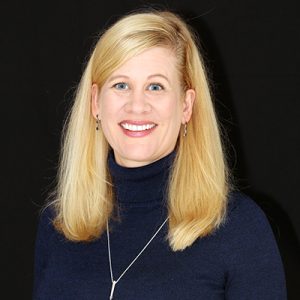
Professor Schomaker is developing new chemical methods to accelerate the discovery of treatments for tuberculosis (TB), a disease that continues to impact millions of people worldwide. Support from the Edward and Nancy Fody Endowed Professorship provides critical resources for advancing this work while enabling students and trainees to engage deeply in cutting-edge research. By supporting research-focused training opportunities, the professorship helps prepare the next generation of scientists to tackle pressing challenges in human health.
About the Edward and Nancy Fody Professorship of Chemistry Fund
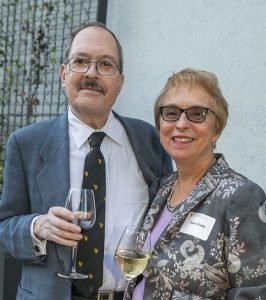
Dr. Edward Fody (UW–Madison M.S. Chemistry ’71) built a distinguished career in pathology, establishing laboratories at three hospitals, leading Western Michigan Pathology Associates, teaching at two medical schools, and co-editing the best-selling text Clinical Chemistry – Principles, Techniques and Correlations. Mrs. Nancy Fody (UW–Madison B.S. Chemistry ’72) has been a steadfast partner throughout his career, and together they endowed the Edward and Nancy Fody Professorship in Chemistry to help the Department of Chemistry recruit, retain, and recognize outstanding faculty. Their gift supports the professor’s salary, benefits, and research environment.
Irving Shain Chair of Chemistry
Sam Gellman
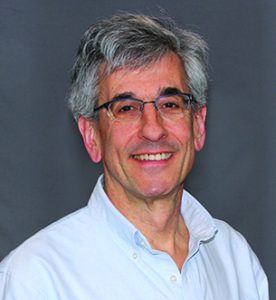
Professor Gellman’s lab studies how proteins fold into precise shapes to perform essential biological functions like catalyzing reactions, recognizing specific molecules, and relaying signals within cells. Using that knowledge, his group designs entirely new synthetic molecules (“foldamers”) that mimic and improve upon these natural functions. This work could eventually pave the way for new therapeutics and biomaterials with more precise, protein-like capabilities. By blending organic chemistry, biochemistry, and molecular biology, this research pushes the boundaries of what synthetic molecules can do to address human health challenges. Funding from the Irving Shain Chair in Chemistry Fund helps Professor Gellman juggle the demands of a busy research program with the rigorous schedule of the chair’s position.
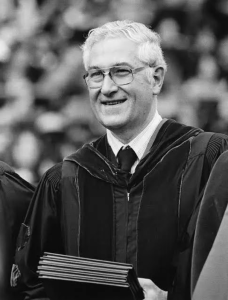
About the Irving Shain Chair of Chemistry Fund
The Irving Shain Chair in Chemistry honors the legacy of Professor and Chancellor Emeritus Irving Shain, who joined the UW–Madison faculty in 1952, chaired the Department of Chemistry, and later served as chancellor from 1977-86, establishing University Research Park and pioneering student exchange programs with China that continue today. Created by his sons, John and Paul, in honor of his impressive legacy, the chair passes from department chair to department chair, providing crucial research support as each leader balances their role as principal investigator with departmental leadership. As inaugural holder Robert McMahon shares, “Through the generosity of John and Paul Shain, their father’s dedication to excellence will stand as a permanent guidepost to all future faculty members in the Department.”
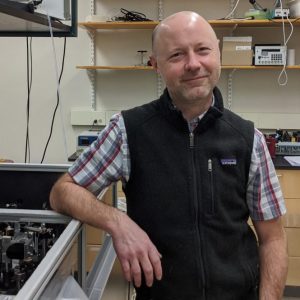
V.W. Meloche Bascom Professor of Chemistry
Martin Zanni
The Zanni Group has helped invent a new set of technologies, called 2D spectroscopies, for identifying and studying substances. They have used 2D spectroscopy to determine the shape of a protein that is the likely cause of insulin loss in type 2 diabetes and to test if and how carbon nanotubes might be used in new types of solar cells. The scientific insights might be used to create better hormone therapies for diabetics and lead to thinner and flexible solar cells. The V.W. Meloche-Bascom Professorship plays a vital role in this work by giving the group the flexibility to respond quickly to the unexpected. Some of science’s most important discoveries emerge unplanned, as a byproduct of other experiments, and the professorship’s support allows the team to swiftly redirect resources by funding supplies, equipment, or personnel to chase a promising new lead. When those leads prove truly novel, they can grow into patents or fully-funded research programs with their own federal support.
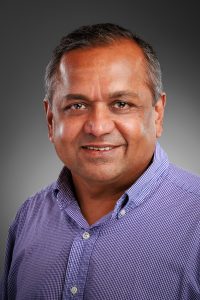
V.W. Meloche Bascom Professor of Chemistry
Arun Yethiraj
Professor Yethiraj’s lab uses computer simulations, mathematical models, and machine learning to understand how complex fluids, like polymers, charged molecules, and specialized liquid solvents, behave at the molecular level. Their work spans several practical applications, including improving lithium-ion battery performance by studying how to prevent damaging dendrite growth and understanding novel solvents that could enable new industrial and technological uses. By connecting molecular-level details to larger-scale behavior, the group provides fundamental insights that can inform the design of better materials and energy technologies. The V.M. Meloche Bascom Professorship allows Professor Yethiraj to explore new directions that emerge that are not currently funded. The flexibility afforded by the professorship allows an allocation of resources to exciting new avenues.
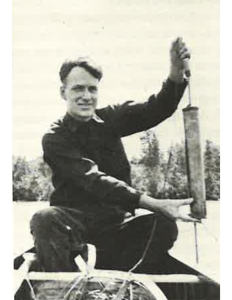
About the V. W. Meloche Bascom Professorship Fund of Chemistry
The V. M. Meloche-Bascom Professorship was created in 1982 by Alice Meloche in honor of her husband, Villiers Wilson Meloche, a UW–Madison chemistry alumnus (BS, MS, Ph.D.) and Emeritus Professor whose career centered on analytical and inorganic chemistry. Established with support from friends, students, and colleagues, the professorship honors a Chemistry faculty member’s excellence in teaching, research, and service, providing ongoing funding for scholarly work, such as research assistants, equipment, and travel to conferences. It’s a lasting way to celebrate a beloved mentor’s legacy while fueling the next generation of chemistry research at UW–Madison.
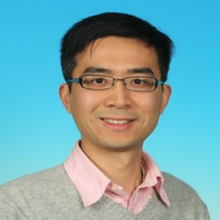
Joseph Hirschfelder Professor of Chemistry
Xuhui Huang
Professor Huang’s lab develops statistical mechanics theory, computer simulations, and artificial intelligence methods to understand how biological molecules move, interact, and carry out their functions. These molecular motions are often difficult to capture directly through experiments but are essential to understanding how biological systems work. The group’s research has revealed how molecular machines such as RNA polymerase copy genetic information, how changes in protein dynamics can contribute to disease, and how new drug strategies can target disease-causing proteins. By connecting molecular-level behavior to biological function, the lab’s work can help uncover disease mechanisms and guide the development of new therapeutics. Funding from the Joseph Hirschfelder Professorship gives Professor Huang the flexibility to pursue innovative and emerging research directions, particularly at the intersection of theoretical chemistry and artificial intelligence.
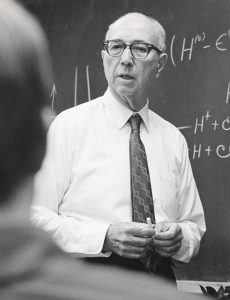
About the Joseph O. Hirschfelder Professorship Fund
The Hirschfelder Professorship Fund was established November 1, 1988, through a major gift to WARF and additional support to the UW Foundation, honoring Joseph O. Hirschfelder — a UW–Madison chemistry professor who founded the university’s Theoretical Chemistry Institute and became a National Medal of Science recipient over his 40-year career. His widow, Dr. Elizabeth S. Hirschfelder, an eminent mathematician in her own right, helped carry his legacy forward through this and related gifts. Their generosity reflects a deep commitment to sustaining excellence in theoretical chemistry at UW–Madison — ensuring that whoever holds the Hirschfelder Professorship has the flexibility to pursue ambitious research, mentor graduate students, and engage with the broader scientific community, carrying forward the same spirit of discovery that defined Hirschfelder’s own remarkable career.
Evan P. and Marion Helfaer Professor of Chemistry
Currently unassigned
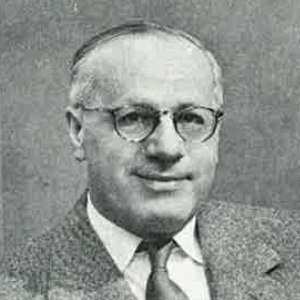
About the Evan P. Helfaer Chemistry Fund
Evan P. Helfaer’s generosity to the Department of Chemistry began in 1966 and evolved over the years into lasting support for faculty excellence. Rather than a one-time gift, his philanthropy reflected an ongoing partnership with the university. The Helfaer Foundation worked closely with UW leadership over the decades to shape how his contribution could best serve the department, ultimately resulting in the Evan P. and Marion Helfaer Professorship in Chemistry. Today, that professorship stands as a testament to Evan and Marion Helfaer’s enduring commitment to supporting chemistry education and research at UW–Madison.
John and Dorothy Vozza Professor of Chemistry
Currently unassigned
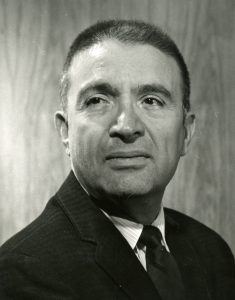
About the John and Dorothy Vozza Research Fellowships Fund
Through their trust, John and Dorothy Vozza left a lasting legacy in the Department of Chemistry at UW–Madison, establishing a permanent endowment to support a professorship in organic chemistry bearing their names. Dr. Vozza earned his Ph.D. in organic chemistry from UW–Madison in 1948 and went on to a 29-year career as a professor at UW–Parkside, retiring with emeritus status in 1977. Together, he and Dorothy have empowered some of the department’s most accomplished faculty to pursue groundbreaking research, ensuring their names remain tied to scientific discovery at the Department of Chemistry for generations to come.
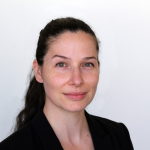
Hall-Fisher Professor of Chemistry
Eszter Boros
The Boros Lab designs new metal-based compounds that can both light up diseases for imaging and deliver targeted treatment, an approach known as “theranostics.” Their work focuses on developing more precise tools to diagnose and fight cancer and bacterial infections, with the goal of enabling truly personalized medicine tailored to each patient. By combining chemistry, radiochemistry, and preclinical testing, the lab’s research could lead to earlier disease detection and more effective, targeted therapies with fewer side effects for patients. Funding from the Hall-Fisher Professorship allows the Boros lab to conduct research on new and innovative strategies for isotope separation and radiopharmaceutical synthesis.
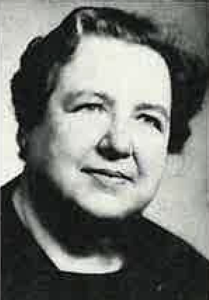
About the Hall-Fisher Separation and Purification Processes Using Polymers Fund
Sallie Ann Fisher earned her BS, MS, and Ph.D. from the UW–Madison Department of Chemistry, and her time there shaped both her career in purification science and the philanthropic legacy she chose to leave behind. Her gift honors two mentors: Norris Folger Hall, who supervised her undergraduate thesis and remained a guide throughout her Ph.D. and beyond, and V.W. Meloche, her major professor, whom she also supported through a dedicated lectureship in his memory. In gratitude for the foundation they gave her, Fisher established the Hall-Fisher Fund to support ongoing research and scholarship across the University in the field of separation and purification using polymers, a nod to the discipline that shaped her own career, even as the fund’s support extends beyond the Department of Chemistry itself.
Charles Tullock Chemistry Faculty Fund
Sam Gellman (Professor Gellman is also the Irving Shain Chair of Chemistry; please read more about his research here)
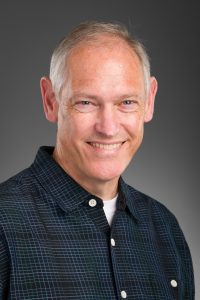
Shannon Stahl (Professor Stahl is also the Lester R. McNall Professor of Chemistry; please read more about his research here)
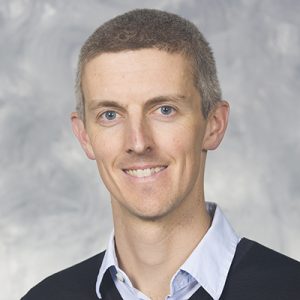
Tim Bertram
The Bertram Lab uses custom instrumentation to study the processes that control the chemical composition of Earth’s atmosphere. Direct measurements of atmospheric chemical composition acquired through field experiments provide critical constraints for air quality and climate models. In parallel, detailed laboratory study of atmospheric chemical mechanisms conducted in the Bertram Lab enhances the predictive capability of air quality models and their response to natural and anthropogenic perturbations. Funding from the Charles Tullock Chemistry Faculty Fund permits the Bertram Lab to quickly respond to unique opportunities and expand the scope and impact of our research. Most recently, the Bertram group used this funding to deploy custom instrumentation to a research aircraft in New York City to study the vertical distribution of air pollutants at night. The data acquired during these flights will be used to seed future, larger federal proposals.
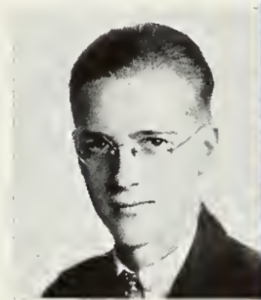
About the Charles Tullock Chemistry Faculty Fund
The Charles Tullock Chemistry Faculty Fund was established through a $1.4 million bequest from Laurabelle S. Tullock, in memory of her husband, Dr. Charles W. Tullock, who earned his Ph.D. in Chemistry from UW–Madison in 1938. Dr. Tullock went on to a distinguished career as a research chemist at DuPont, holding numerous patents, most notably for his work synthesizing sulfur tetrafluoride. He served during World War II, helping the Chinese Nationalist government defend against chemical weapons attacks. Rather than functioning as a traditional endowed professorship, the fund gives the Department of Chemistry flexible, rapidly deployable resources to compete for top faculty, covering costly startup packages for new hires and helping retain star faculty being recruited by rival universities, ultimately helping UW–Madison maintain its standing as one of the nation’s leading chemistry programs.
Margaret L. and Harlan L. Goering Visiting Professorship in Organic Chemistry
Currently unassigned
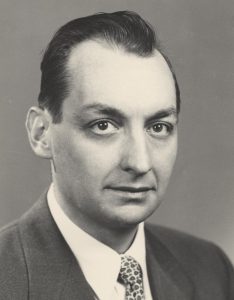
About the Margaret L. and Harlan L. Goering Visiting Professorship in Organic Chemistry Fund
The Margaret L. and Harlan L. Goering Visiting Professorship in Organic Chemistry brings distinguished scientists from around the world to UW–Madison, enriching the department with fresh perspectives through lectures, collaboration, and direct engagement with students and faculty. Supported by the H.L. and M.L. Goering Professorship/Lectureship Fund, this endowed fellowship reflects the Goerings’ vision of connecting UW–Madison’s organic chemistry community to the leading minds shaping the field globally. Their generosity ensures that students and faculty alike continue to benefit from world-class insight and collaboration for generations to come.
Meet Our Director of Development

Kayla Riese
Position title: Director of Development, College of Letters & Science, Wisconsin Foundation and Alumni Association
Email:
kayla.riese
Phone: 608.732.1142
Advancement Committee

Samuel H. Gellman
Position title: Irving Shain Chair of Chemistry, Professor of Chemistry, Vilas Research Professor, Ralph F. Hirschmann Professor of Chemistry
Email:
gellman
Phone: 608.262.3303
Kayla Riese
Position title: Director of Development, College of Letters & Science, Wisconsin Foundation and Alumni Association
Email:
kayla.riese
Phone: 608.732.1142


Kimberly Hazen
Position title: Marketing and Communications Manager
Email:
kmhazen
Phone: 608-262-9189

Kayla Driscoll
Position title: Associate Director of Faculty Services
Email:
kayla.driscoll
Phone: 608.262.1480