Title: Developing Synthetic Tools in Organoboron Chemistry to Access Phosphines and Phosphonates
Abstract: Organophosphorus compounds have had significant historical value in agrochemicals, pharmaceuticals, and as ligands in metal-catalyzed reactions. This seminar will focus on methods developed in the Clark group to utilize organoboron chemistry to access valuable organophosphorus reagents. The phosphine- and phosphonate-directed C-H borylation will be described, including reactions utilizing the resulting borylated phosphines and phosphonates in transformations utilizing the carbon-boron bond. In particular, the recent development of ortho-borylated arylphosphonates in an oxidative homocoupling will be described, which provides biarylbisphosphonates, precursors to ubiquitous bisphosphine ligands. The lecture will conclude with recent work that couples arylboronate esters directly with dialkylphosphites to form arylphosphonates.
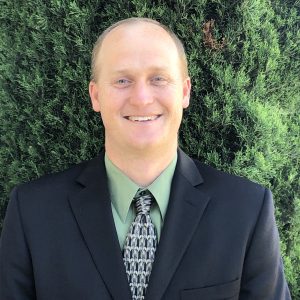
Bio: Professor Clark received his BA in Chemistry from the University of San Diego in 2001. He completed his PhD under the mentorship of Keith Woerpel at the University of California, Irvine in 2006. After an NIH Ruth L. Kirschstein postdoctoral research fellowship at the University of Wisconsin with Charles Casey, he joined the faculty at Western Washington University in 2007. In 2011, Tim moved back to his Alma Mater at the University of San Diego, where he has been since. His teaching and research are focused on the areas of organic and organometallic chemistry, especially in organoboron chemistry. More recently, he has extended the scope of his research to organophosphorus chemistry. His passion lies in leading undergraduate students to an appreciation for the richness of chemical concepts and inquiry, especially through undergraduate research where he has mentored over 80 undergraduate students. His research program has been funded by several granting agencies including an NSF CAREER award and other funding from NSF, funding from the National Institutes of Health, ACS-PRF and Research Corporation. He has received awards from the Council of Undergraduate Research (CUR Chemistry Outstanding Mentor), Research Corporation (Cottrell Scholars STAR award) and the Dreyfus Foundation (Henry Dreyfus Teacher Scholar Award). He has 28 independent publications, including papers in JACS, Angewandte, and ACS Catalysis.