Title: Designing for Disorder: Electrocatalytic Synthesis with Interfacial Control
Abstract:
Chemical synthesis driven by electricity offers a sustainable, scalable, decentralized, and energy-efficient route to furnish value-added products – from fuels to complex molecules. Maximizing reaction efficiency and durability requires immobilized catalytic active sites on electrodes, resulting in dispersed and non-uniform sites. This heterogeneity challenges iterative optimization of reactivity through traditional catalyst modifications, which rely on uniform, singular active sites. How do we rationally enhance electrocatalysis if the active sites cannot be identified or found?
This lecture focuses on my group’s catalyst development strategy designed for this disorder, enabling efficient and selective chemical synthesis by heterogenous electrocatalysts. First, we have developed a non-covalent synthetic strategy for tuning charge transfer at electrodes with molecularly tunable, regenerative, and recoverable surface layers prepared in a single, in-situ step. Applicable to various electrode materials and morphologies, thus compatible with disordered active sites, these layers enable enhanced durability and cyclability of catalytic energy conversion systems and enable order-of-magnitude enhancements in the rates of hydrogen peroxide production. Second, we have advanced the use of reusable catalytic electrodes, with their interfacial structure tuned by the addition of Lewis and Brønsted acids, for reductive fragment-based electrophile coupling to forge C(sp3)-C(sp3) bonds and the preparation of derivatized bioactive compounds. Our methods development is guided by in-situ spectroscopies, revealing the substrate- and intermediate-electrode interactions that redirect product selectivity. Combining these advances with mechanistic studies and electrochemical modelling, we introduce a conceptual catalyst development framework where the inherent structural disorder of heterogeneous electrocatalysts systems is a feature, not a deterrent.
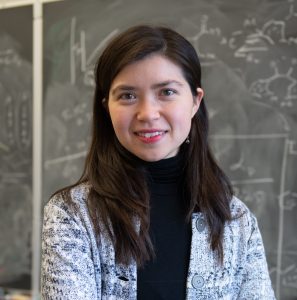
Bio: Prof. Anna Wuttig was born in Washington, D.C., and she spent time in Germany, Japan, and the U.S. during her early years. She received her A.B. from Princeton University, where she was introduced to scientific research in laboratories of Profs. Haw Yang, Robert Cava, and Andrew Bocarsly. She received her Ph.D. from MIT with Prof. Yogesh Surendranath, and she was an NIH Postdoctoral Fellow at UC Berkeley in Prof. F. Dean Toste’s research group. She joined the faculty of the University of Chicago as a Neubauer Family Assistant Professor in the Chemistry Department and established her research group in July 2021. Her research interests center on the development of electricity-driven chemical reactions, with an emphasis on embracing the inherent structural disorder in heterogeneous electrocatalysis and developing interdisciplinary concepts to understand and manipulate it.
Host: Prof. Shannon Stahl