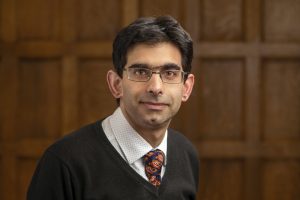
Prof. Nilay Hazari
Title: First-Row Catalysts for the Reversible Hydrogenation of Carbon Dioxide to Formic Acid
Abstract:
The development of sustainable synthetic methods to produce formic acid (or formate salts) is highly attractive, as approximately one million tons of formic acid are currently produced each year from nonrenewable, fossil-fuel-derived feedstocks. A particularly promising route involves the hydrogenation of carbon dioxide to generate formic acid using hydrogen produced via water electrolysis powered by renewable electricity. Moreover, formic acid could serve as a liquid organic hydrogen carrier if suitable catalysts are developed for efficient hydrogen release.
Here, we describe recent mechanistic studies focusing on our state-of-the-art Fe catalysts ligated by PNP pincer ligands for both carbon dioxide hydrogenation to formate and formic acid dehydrogenation. These studies include investigating carbon dioxide insertion and catalyst deactivation pathways. They guided the design of new PNP ligands incorporating an additional hemilabile donor to prevent catalyst decomposition.
The new ligands were coordinated to Fe and Mn centers. By carefully selecting the hemilabile substituent and linker length, we developed a Mn catalyst that achieves a turnover frequency of up to 158,000 h⁻¹ and a turnover number of up to 838,000 for carbon dioxide hydrogenation to formate. These are among the highest values reported for molecular catalysts based on either first-row or precious metals, validating our hypothesis that the identity of the hemilabile substituent can significantly enhance catalytic performance. We expect that this general strategy, as well as the ligands described herein, will be valuable for developing improved pincer-ligated catalysts for a variety of transformations.
Bio:
Nilay Hazari is the John Randolph Huffman Professor of Chemistry. His research focuses on the use of mechanistic studies to design transition metal-based catalysts for varied applications, including the synthesis of commodity chemicals, pharmaceuticals, and molecules for energy-storage. Through this work he has made fundamental contributions to the mechanisms of hydride transfer (from transition metal hydrides), cross-coupling, and cross-electrophile coupling reactions, as well as applied contributions through the development of catalysts for CO2 reduction, commercial Pd precatalysts, and homogeneous organic reductants. His honors include the Harry Gray Award for Creative Work in Inorganic Chemistry by a Young Investigator from the ACS and election as a GEQO Fellow by the Organometallic Chemistry Group of the Spanish Royal Society of Chemistry. Before becoming chair of the Yale Chemistry Department, Hazari served as director of undergraduate studies for 12 semesters. His service to Yale includes membership on the Tenure and Appointments Committees for both the Physical Sciences and the Biological Sciences, and participation on the Scientific Leadership Team of the Yale Center for Natural Carbon Capture. He received the Dylan Hixon ’88 Prize for Teaching Excellence in the Natural Sciences at Yale and produces a series of educational films on topics in General Chemistry, entitled “Nilay’s Chemistry Videos.” He is active in the Pathways to Science program at Yale and hosts an annual “Chemistry Magic Show” for the local community.
Keywords: Catalysis, Energy, Transition Metal, Mechanism, Synthesis
Host: Prof. Shannon Stahl