Title: Catalysis with Earth-Abundant Metals: Bond-Formation in Strong and Weak Ligand Fields
Abstract: Transition metal catalysis has revolutionized chemical synthesis. Trans-formations such as asymmetric hydrogenation, olefin metathesis, and C–H functionalization have reshaped how chemists construct bonds and, in doing so, expanded accessible molecular space. Historically, these reac-tions have relied on closed-shell, precious-metal complexes that undergo predictable two-electron redox processes. The growing emphasis on sustainability has prompted a shift toward earth-abundant first-row transi-tion metals, including manganese, iron, cobalt, and nickel. These elements feature weaker ligand fields, accessible one-electron redox chemistry, and frequently open-shell metal complexes. As a result, the fundamental or-ganometallic principles needed to understand and optimize their reactivity remain comparatively underdeveloped. My lecture will present our work on developing catalysts with earth-abundant transition metals and under-standing the fundamental organometallic chemistry of how they operate. Transformations such as the site-selective functionalization and hydro-genation of (hetero)arenes and new methods for carbon-carbon bond formation will be discussed.
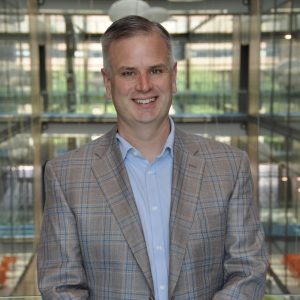
Bio: Paul is a leading expert in the application of catalysis to challenges in sustainable chemistry. He was born in Philadelphia and grew up in Doylestown, PA. In 1995, he graduated magna cum laude with a B.S. in Chemistry from Virginia Tech under advisor Joseph Merola. Paul then earned his Ph.D. with John Bercaw at Caltech in 2000 studying the mechanism of metallocene-catalyzed olefin polymerization and hydrometallation chemistry.
Following a postdoc with Christopher Cummins at MIT, Paul joined the faculty at Cornell University in 2001 as assistant professor. In 2006, he was promoted to associate professor, and in 2009 he was named the Peter J. W. DeBye Professor of Chemistry. In 2011, he moved to Princeton University as the Edwards S. Sanford Professor of Chemistry.
Among Paul’s many awards and honors are a CAREER award, a Packard fellowship, an Arthur C. Cope Scholar Award, the Linus Pauling medal, the Rylander Award from BASF and, most recently, the Gabor Somorjai Award for Creative Research in Catalysis. He is the Editor-in-Chief of Organometallics, is a faculty fellow with the Princeton Women’s Basketball team and lives in Princeton with his wife, Karen, and two daughters.
Host: Prof. Shannon Stahl