Title: Catalysis with Earth-Abundant Metals: Distinct Pathways for Carbon-Carbon Bond Formation
Abstract: Catalytic methods to form carbon-carbon bond are central in synthetic chemistry and some of the most widely used reactions in drug discovery and process chemistry. Palladium catalysis is dominant owing to predictable two-electron chemistry that gives rise to robust and highly diverse reactions. These reactions are most successful with C(sp2) hybridized coupling partners. As emphasis on increasing C(sp3) content in drug candidates has motivated exploration of alternative catalytic methods for C–C bond formation. Earth-abundant first-row transition metals, by virtue of their distict electronic structures and redox chemistry, offer promising reactivity with C(sp3)-containing coupling partners. Our research group has demonstrated that iron, cobalt and nickel complexes are effective catalysts for C(sp2)–C(sp3) Suzuki–Miyaura cross-coupling reactions. Mechanistic studies have firmly established the intermediacy of the electrophile-derived alkyl radicals. My lecture will focus on understanding the generation and capture of these radicals in the context of C(sp2)–C(sp3) bond formation. Specifically, the role of spin state and metal geometry as a function of iron, cobalt and nickel will be emphasized as well as establishing principles for catalyst optimization. The interplay of these mechanistic investigations with applications in the synthesis of active pharmaceutical ingredients and extension of the method to unsolved synthetic challenges will be presented.
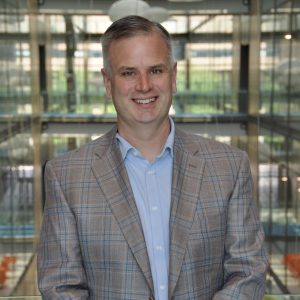
Bio: Paul is a leading expert in the application of catalysis to challenges in sustainable chemistry. He was born in Philadelphia and grew up in Doylestown, PA. In 1995, he graduated magna cum laude with a B.S. in Chemistry from Virginia Tech under advisor Joseph Merola. Paul then earned his Ph.D. with John Bercaw at Caltech in 2000 studying the mechanism of metallocene-catalyzed olefin polymerization and hydrometallation chemistry.
Following a postdoc with Christopher Cummins at MIT, Paul joined the faculty at Cornell University in 2001 as assistant professor. In 2006, he was promoted to associate professor, and in 2009 he was named the Peter J. W. DeBye Professor of Chemistry. In 2011, he moved to Princeton University as the Edwards S. Sanford Professor of Chemistry.
Among Paul’s many awards and honors are a CAREER award, a Packard fellowship, an Arthur C. Cope Scholar Award, the Linus Pauling medal, the Rylander Award from BASF and, most recently, the Gabor Somorjai Award for Creative Research in Catalysis. He is the Editor-in-Chief of Organometallics, is a faculty fellow with the Princeton Women’s Basketball team and lives in Princeton with his wife, Karen, and two daughters.
Host: Prof. Shannon Stahl