Title: Electronic Excitations: Theoretical Foundation and Computational Advances
Abstract:
Electronic excitations play fundamental roles across sciences, and their efficient and accurate description is critical for spectroscopy, photochemistry, energy and charge transfers. Our theoretical development and understanding of electronic excitations were based on efforts in correcting systematic errors in density functional theory (DFT), initially for ground states. Conventional density functional approximations suffer from significant delocalization errors, leading to underestimating energy gaps in molecules and materials, incorrectly predicting the dissociation limits of chemical bonds, over–delocalizing charge distributions, and misaligning energy levels at interfaces. We have developed the Localized Orbital Scaling Correction (LOSC) to correct the delocalization errors, elevating DFT to a new level of robustness and accuracy, with major improvement in total energy, density and energy levels for finite and periodic systems. The orbital energies derived from LOSC-DFT calculations also provide accurate information about excited states directly from the ground-state calculations. Parallelly in terms of total energies, ∆SCF has been used since the 1970s to achieve impressive accuracy for excited states, but it has lacked formal justification. We have now established the theoretical foundation, demonstrating that a valid functional for excited states requires going beyond electron density alone and using the first-order density matrix of the non-interacting reference system. The minimum of this functional corresponds to the ground state energy, consistent with ground state DFT, while the stationary solutions yield excited-state energies and electron densities, validating the ∆SCF approach. Our work establishes linear conditions for fractional charges in excited states and introduces the concept of excited state chemical potentials, which clarifies the physical meaning of occupied and virtual orbital energies. Building on this ∆SCF foundation, we have formulated novel, highly accurate, and efficient methods for excited state calculations, based on occupancy extrapolation to reach many excited states, including conical intersections, from ground state calculations, and quasiparticle Hamiltonian to describe multiconfigurational states.
Bio:
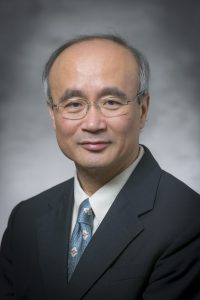
Prof. Yang, the Philip Handler Professor of Chemistry, is developing methods for quantum mechanical calculations of large systems and carrying out quantum mechanical simulations of biological systems and nanostructures. His group has developed the linear scaling methods for electronic structure calculations and more recently the QM/MM methods for simulations of chemical reactions in enzymes.
Host: Prof. Xuhui Huang