Title: From Molecular Imaging to Isomer Separation: Mapping Biological and Environmental Chemical Landscapes with MALDI-Ion Mobility-Mass Spectrometry
Abstract:
Biological systems, environmental contaminants, and chemical reactions all present complex molecular landscapes whose characterization requires analytical tools that combine molecular specificity with spatial resolution, speed, and chemical selectivity. Matrix-assisted laser desorption/ionization mass spectrometry (MALDI-MS) provides a powerful platform for rapid, in situ chemical analysis and molecular imaging, while coupling with trapped ion mobility spectrometry (TIMS) adds a separation dimension capable of resolving isomeric species. Our lab develops and applies MALDI-MS and TIMS approaches to characterize spatial chemical heterogeneity in biological systems, investigate environmental exposures, and enable high-throughput chemical analysis. In this seminar, I will highlight our recent work across three areas. First, we apply mass spectrometry imaging (MSI) to map elements and metabolites in heterogeneous biological systems, including the mouse colon and the nematode Caenorhabditis elegans, with an emphasis on understanding host-microbe interactions. Second, we have developed MALDI-TIMS-MS imaging and fast profiling methods for analysis of per- and polyfluoroalkyl substances (PFAS), a class of persistent environmental contaminants. These approaches enable spatial mapping of perfluorooctanesulfonic acid (PFOS) isomers and lipids, rapid profiling of PFAS-bacteria partitioning, and differentiation of perfluorooctanoic acid (PFOA) isomers. Finally, I will discuss a collaborative effort using MALDI-TIMS-MS for chromatography-free, high-throughput screening of reaction stereoselectivity. Together, these studies demonstrate the versatility of MALDI-MS, MSI, and ion mobility separation for interrogating chemical landscapes across biological, environmental, and synthetic systems.
Bio:
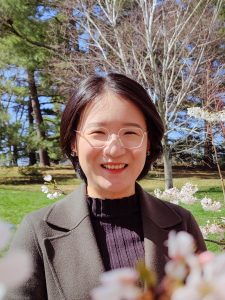
Prof. Tian (Autumn) Qiu earned her BS in Chemistry from Peking University (2012) and PhD from the University of Minnesota (2018). Her PhD studied nanotoxicity mechanisms in environmental bacteria in Prof. Christy Haynes’ lab and the Center for Sustainable Nanotechnology. She was a Beckman Postdoctoral Fellow at the University of Illinois at Urbana-Champaign, working with Prof. Jonathan Sweedler and collaborators on D-amino acids in the microbiome-gut-brain axis. She joined Michigan State University as an Assistant Professor in 2022. Her lab develops MALDI-MS, ion mobility, and MS imaging methods to investigate interactions among environmental contaminants, microbial metabolism, and host responses. She is a recipient of Society for Analytical Chemists of Pittsburgh Starter Grant Award in 2023, ASMS Research Award in 2025, and Chinese American Society for Mass Spectrometry Young Investigator Award in 2026.
Keywords: Mass spectrometry, MALDI, ion mobility, mass spectrometry imaging, per- and polyfluoroalkyl substances (PFAS), host-microbe, high-throughput